


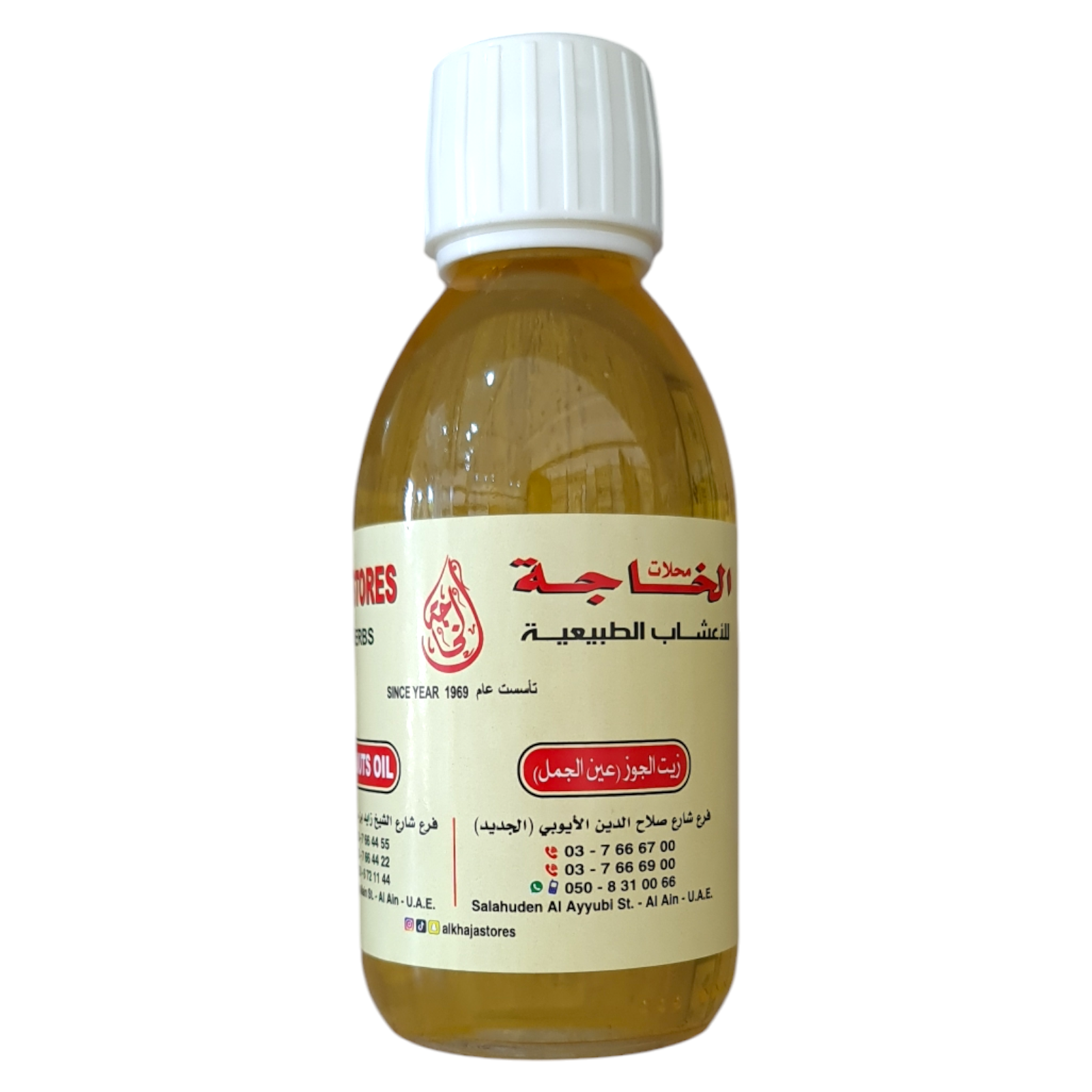
Walnuts Oil

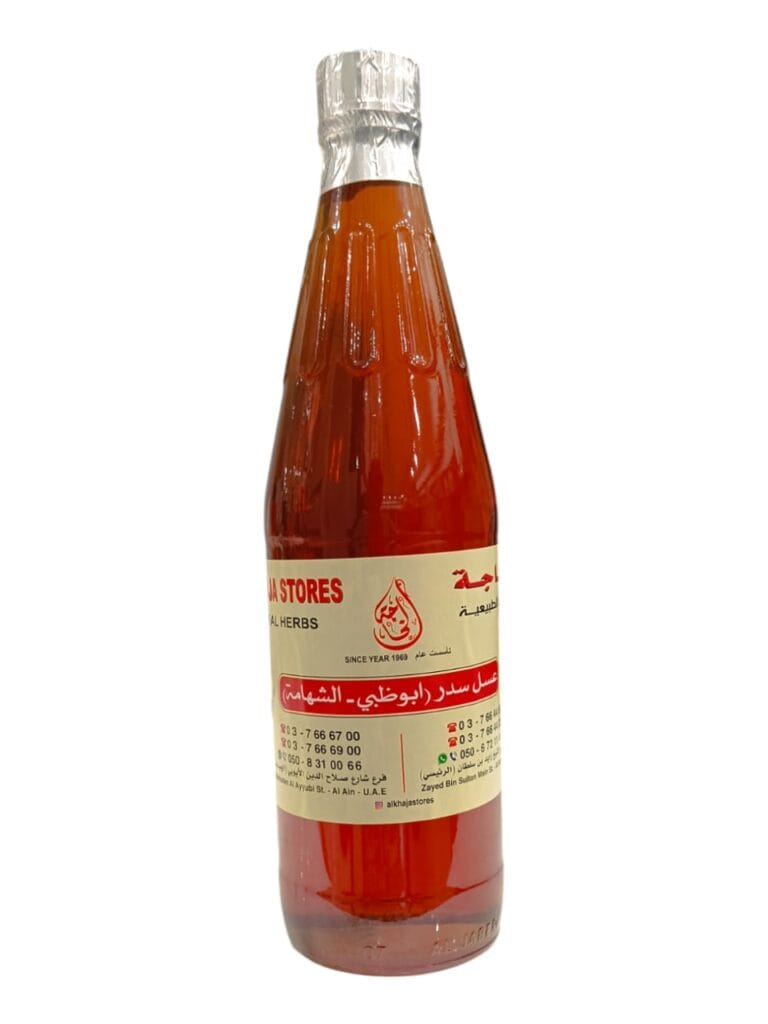
Walnut oil is a natural oil extracted from the seeds of the walnut (Juglans regia), and is known for its rich composition of healthy fats and essential fatty acids such as omega-3, along with vitamins and minerals that promote overall health.


Weight : 200 ml

السعر الأصلي هو: AED 75.00.السعر الحالي هو: AED 63.99.

25 in stock

Brand

Alkhaja Store

12 People watching this product now!

Nutrition facts, 100 g

Brand

Alkhaja Store

Product Description

Walnut oil is a natural oil extracted from the seeds of the walnut (Juglans regia), and is known for its rich composition of healthy fats and essential fatty acids such as omega-3, along with vitamins and minerals that promote overall health.

Benefits of Walnut Oil (Juglans regia):

  1. Promotes Heart Health: It contains omega-3 fatty acids that support heart health and reduce the risk of cardiovascular diseases.
  2. Improves Skin Health: It moisturizes and nourishes the skin, helping to improve its elasticity, leaving it soft and healthy-looking.
  3. Anti-aging: Rich in powerful antioxidants, it helps reduce wrinkles and signs of aging.
  4. Stimulates Hair Growth: It nourishes the scalp and enhances hair growth, helping to strengthen hair and reduce hair loss.
  5. Boosts Brain Health: Omega-3 fatty acids in the oil contribute to enhancing brain function and improving memory.
  6. Antibacterial Properties: It has antibacterial properties, which help protect the skin from infections.
  7. Improves Nail Health: It strengthens nails and prevents breakage.

Walnut oil is an excellent natural option for skincare and haircare, and it also promotes overall health due to its rich nutrient composition.

Customer Reviews

0 reviews
0
0
0
0
0

There are no reviews yet.

Be the first to review “Walnuts Oil”

Your email address will not be published. Required fields are marked *

You have to be logged in to be able to add photos to your review.

Online Sports Nutrition and Natural Dietetics.

Chances are there wasn't collaboration, communication, and checkpoints, there wasn't a process agreed upon or specified with the granularity required. It's content strategy gone awry right from the start. Forswearing the use of Lorem Ipsum wouldn't have helped, won't help now. It's like saying you're a bad designer, use less bold text, don't use italics in every other paragraph. True enough, but that's not all that it takes to get things back on track.

The villagers are out there with a vengeance to get that Frankenstein

You made all the required mock ups for commissioned layout, got all the approvals, built a tested code base or had them built, you decided on a content management system, got a license for it or adapted:

  • The toppings you may chose for that TV dinner pizza slice when you forgot to shop for foods, the paint you may slap on your face to impress the new boss is your business.
  • But what about your daily bread? Design comps, layouts, wireframes—will your clients accept that you go about things the facile way?
  • Authorities in our business will tell in no uncertain terms that Lorem Ipsum is that huge, huge no no to forswear forever.
  • Not so fast, I'd say, there are some redeeming factors in favor of greeking text, as its use is merely the symptom of a worse problem to take into consideration.
  • Websites in professional use templating systems.
  • Commercial publishing platforms and content management systems ensure that you can show different text, different data using the same template.
  • When it's about controlling hundreds of articles, product pages for web shops, or user profiles in social networks, all of them potentially with different sizes, formats, rules for differing elements things can break, designs agreed upon can have unintended consequences and look much different than expected.

This is quite a problem to solve, but just doing without greeking text won't fix it. Using test items of real content and data in designs will help, but there's no guarantee that every oddity will be found and corrected. Do you want to be sure? Then a prototype or beta site with real content published from the real CMS is needed—but you’re not going that far until you go through an initial design cycle.